

 In the world of restorative dentistry, few debates are as persistent—or as critical—as the choice between cement-retained and screw-retained implant restorations. It is a question that affects every clinician, from the seasoned prosthodontist to the general dentist placing their first few crowns. The decision isn't just about technique; it impacts esthetics, long-term maintenance, and the health of the peri-implant tissue.
In Episode 76 of Clinical Chats, we tackled this "Cemented or Screwed?" dilemma head-on. Joined by my co-hosts Dr. Frank Vidjak and Dr. Brian Goodacre, and our special guest Dr. Isra Ahmed, we explored the nuances of this decision, moving beyond simple preferences to look at clinical realities. Whether you missed the episode or just want a refresher on the key takeaways, let's dive into the insights shared by our expert panel.
The Great Debate: Esthetics vs. Retrievability
Historically, the pendulum has swung back and forth. Years ago, screw retention was the gold standard, primarily for retrievability. Then, as esthetic demands grew, cement retention became popular to avoid unsightly screw access holes. Now, we seem to be swinging back toward screw retention, driven by concerns over peri-implantitis caused by residual cement.
During the episode, we discussed how this choice often feels like a trade-off. Do you prioritize the seamless beauty of a cemented crown, or the peace of mind that comes with knowing you can easily remove the restoration if a complication arises?
The Case for Screw Retention
Dr. Frank Vidjak championed the philosophy of retrievability. The primary advantage here is clear: if a screw loosens or porcelain chips, the restoration can be removed, repaired, and replaced without trauma to the implant or the surrounding tissue. Furthermore, the absence of cement eliminates the risk of "silent" inflammation caused by subgingival cement excess—a major factor in peri-implant disease.
The Case for Cement Retention
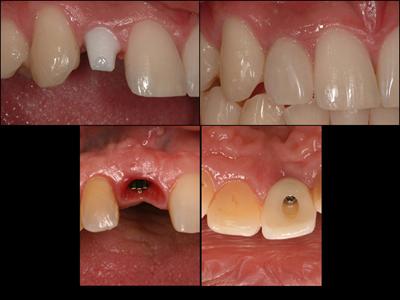
On the other side of the coin, Dr. Isra Ahmed highlighted scenarios where cement might still be the preferred route. In the anterior aesthetic zone, where a screw access hole might compromise the incisal edge or facial aspect of a tooth, cement retention has traditionally offered a superior esthetic result. It allows for ideal ceramic contours and an unblemished surface that mimics natural dentition perfectly.
Technology Changes the Game: Angulated Screw Channels
One of the most exciting parts of our discussion centered on how technology is rendering some of these old trade-offs obsolete. Dr. Brian Goodacre, Director of Clinical Technologies for Nobel Biocare, walked us through the game-changing innovation of Angulated Screw Channels (ASC).
For years, if an implant was placed with a trajectory coming out through the facial aspect of the tooth, cementation was the only esthetic option. You simply couldn't have a screw hole on the front of a central incisor. However, ASC technology allows us to redirect that access hole up to 25 degrees, moving it to the lingual or palatal aspect.
This technology essentially allows us to have our cake and eat it too. We gain the safety and retrievability of a screw-retained crown without sacrificing the esthetics of the facial surface. It bridges the gap between the two schools of thought, offering a solution that satisfies both the biological need for hygiene and the patient's desire for beauty.
The "Hidden Cement" Problem: Ti-Bases
We also delved into a topic that often flies under the radar: the "hidden cement" problem associated with Titanium Bases (Ti-Bases). Even if you choose a screw-retained workflow, if your lab is cementing a zirconia crown onto a Ti-Base, you are still relying on cement.
If this cementation happens in the laboratory, the risk of subgingival excess in the mouth is removed. However, the interface between the Ti-Base and the restorative material is critical. We discussed the importance of precision milling and quality control. If that interface isn't sealed perfectly, you risk micro-gaps and bacterial infiltration, which can lead to long-term failure. This reinforced the importance of understanding exactly how your laboratory fabricates your restorations—mechanical retention versus cementation is a detail you need to know.
Splinted Units and Passive Fit
When we moved the conversation to multiple units and full-arch cases, the consensus shifted even more strongly toward screw retention.
Dr. Vidjak emphasized the critical nature of "passive fit" for splinted restorations. With a screw-retained bridge, you can verify that the framework fits passively on all implants. If you cement a large bridge, you lose that tactile verification. A non-passive framework can introduce dangerous stress into the system, leading to bone loss or screw fracture.
For full-arch cases, the panel agreed that screw retention is almost always the superior choice, often facilitated by Multi-Unit Abutments (MUAs) that correct angulation at the tissue level.
Making the Decision for Your Patient
Ultimately, there is no single "right" answer for every case. As we reviewed my father Dr. Baldwin Marchack's original decision tree, we saw that while the tools have changed, the core principles remain. You must weigh the specific risks and benefits for the individual patient sitting in your chair.
- Is the patient at high risk for peri-implantitis? Lean toward screw-retained to avoid cement.
- Is the implant angulation challenging? Look into Angulated Screw Channels.
- Is it a high-esthetic anterior case? Consider if technology can allow for a screw, or if a custom abutment with cementation is truly necessary.
We hope this episode helped clarify the decision-making process for your next implant case. By combining biological principles with modern technology, we can provide treatments that are safe, retrievable, and beautiful.